
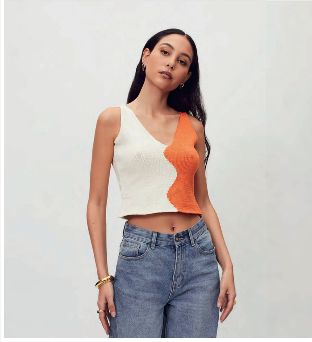
Designing hand-knits that make sense for your brand.
How to design hand-knitted garments that hold their quality and their margin, from stitch choice to construction.
A hand-knit garment makes design sense when its stitch count, yarn and construction are chosen with artisan hours in mind. Because hours are the dominant cost, the design decisions that keep a piece viable are the ones that control stitch count and complexity, not the ones that control run size.
Designing hand-knitted garments that make sense for your brand
Hand-knit is not a constraint on design; it is a different set of levers. A machine-knit designer optimises for machine capability and setup. A hand-knit designer optimises for stitch count, tension/gauge and pattern complexity, because those are what set the artisan hours in the piece.
Some of the most striking hand-knit work comes from leaning into what hands do that machines cannot: long fringe knitted stitch by stitch, complex cables, open lace, and fabric that shifts weight and drape in ways a flat-bed machine will not produce. The Jil Sander runway pieces KOCO has knitted are an example of design that uses the method rather than fighting it.
The role of pattern development is to translate a design into a written pattern a knitter can follow line by line. Each size is written as a separate detailed pattern, with no abbreviations. That translation is where a design either stays viable or quietly becomes too hours-heavy to cost in.
Design levers, and what each one costs.
| Lever | Effect on the garment | Effect on artisan hours |
|---|---|---|
| Stitch choice | Sets texture and drape | Cable and lace cost more per stitch than stockinette |
| Tension/gauge | Sets weight and hand feel | Finer tension/gauge means more stitches and more hours |
| Yarn | Sets fibre, colour, behaviour | Heavier yarn can reduce stitch count at the same size |
| Construction | Sets silhouette and seaming | More panels mean more joining by hand |
| Surface area | Sets garment size and coverage | Larger area means more stitches and more hours |
Bring design and pattern development together early.
The cost of a hand-knit garment is set at the design stage, not at the quoting stage. If pattern development sees the design after it is fixed, the hours are already locked in. If it sees the design while stitch and tension/gauge are still open, the same aesthetic can often be held at a lower stitch count.
Send the sketch or image at the concept stage. We will tell you where the hours sit and what would move them, before the design is committed.
What sourcing directors ask us.
Yes. Long fringe knitted stitch by stitch, complex cables, open lace and shifting drape are all things hands do that flat-bed machines do not. Several KOCO collaborations for runway have leaned on exactly this.
At the concept stage, while stitch choice and tension/gauge are still open. That is when the hours in the piece can be moved. Once the design is fixed, the hours are fixed with it.
An image or sketch is all we need, along with your intended quantity and your target delivery date. We write the written pattern from the image or sketch, knit a prototype swatch, and produce a sample for your sign-off before bulk knitting begins. A formal tech pack is never a requirement.
Send us your sketch.
An image or sketch is all we need to start. We will come back with feasibility, indicative costing and lead times for your hand-knit project.