
Hand-knit manufacturing, made differently.
An Australian-founded hand-knit manufacturer for global fashion houses, training women artisans in rural Tamil Nadu to read written patterns.
A method that began with one woman and ten-year-old hands.
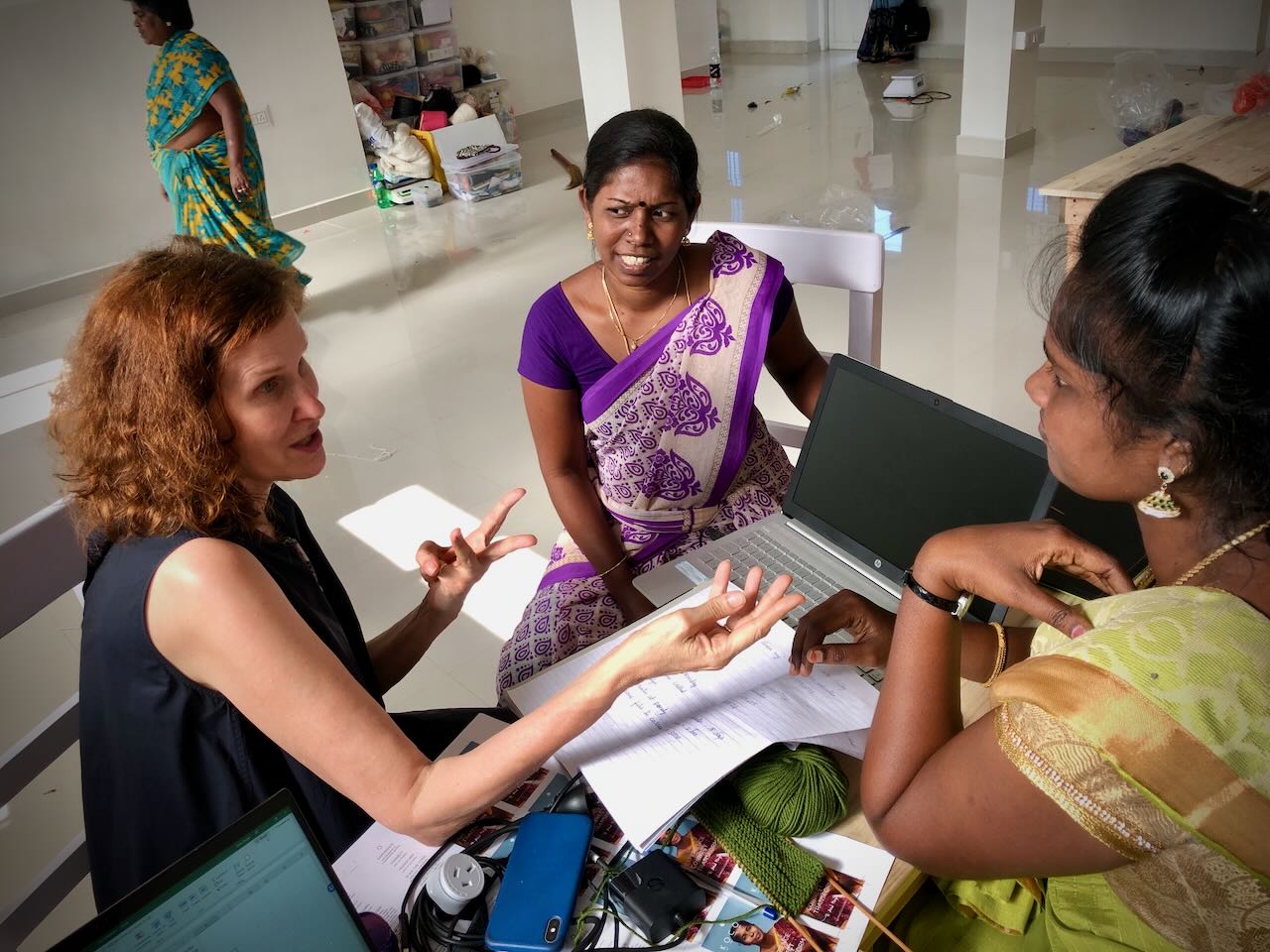
KOCO was founded over a decade ago by Danielle Chiel, an Australian who learned to knit at ten and came to the craft from a music background. The company began with a conviction that hand-knitting could be done to a commercial standard without a single machine, and that the people doing it could be trained, named and credited rather than treated as an anonymous labour pool.
The production base is rural Tamil Nadu, in southern India. KOCO is Australian-owned and Australian-founded. The artisans are women, most of whom had never been to school. Each is taught English literacy and basic maths, so she can read a written knitting pattern rather than work from a sketch.
The work is organised around centralised village hubs, not home-based subcontracting. Artisans gather to knit, support one another, and hold a shared standard. Every garment is made by a single artisan from first stitch to last, with no machine at any stage.
We call it Haute Tricot.
The name for the methodology, not a product. It describes what is different about how KOCO works, and why that difference holds at scale.
KOCO believes it is the only hand-knitting operation in the world where artisans work from written patterns rather than sketches. That is not a detail of process; it is the basis of quality control. A written pattern can be checked, repeated and handed to a second knitter who will produce the same result. A sketch cannot.
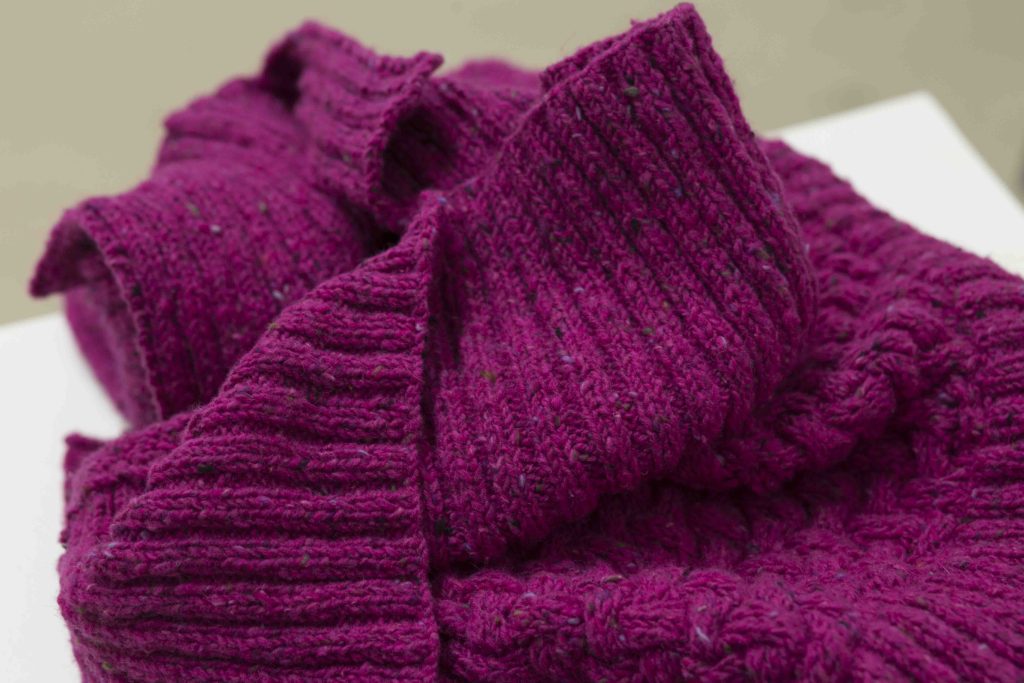
Each size is written as a separate pattern, with no abbreviations. In conventional hand-knit production, individual knitters are generally not given written patterns. Before any garment is knitted, an individual tension swatch is made on bamboo and timber needles so the tension/gauge is checked to the yarn and the hand of the artisan who will make it.
Haute Tricot is what allows a hand-knit operation to behave like a manufacturer rather than a studio: consistent output across hundreds of pieces, traceable to a single maker per garment, with no machine at any stage.
Four hubs, one shared standard.
Artisans work from centralised village hubs, not from home. The hubs are how quality and fair conditions are held, and how a woman new to the craft is supported by experienced knitters beside her.
Temple Village
One of four centralised village hubs where artisans gather to knit, not work from home. The hub holds the shared standard: written patterns, tension swatches and the company of other knitters.
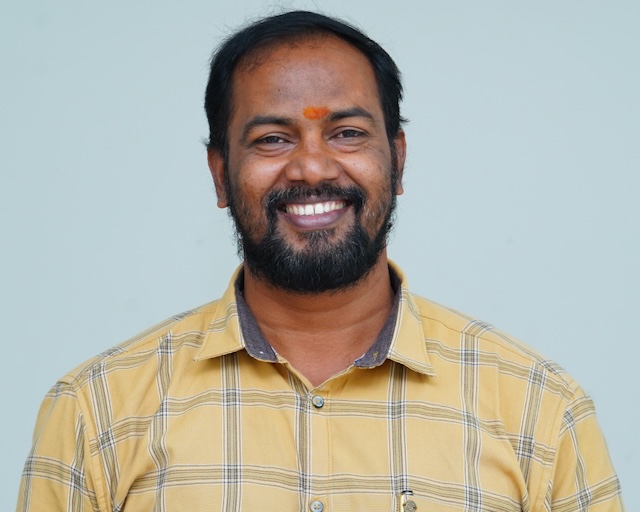
Farmer Village
Work is concentrated here rather than dispersed to isolated home labour. The hub model is how quality and fair conditions are held, and how a woman new to the craft is supported by experienced knitters beside her.
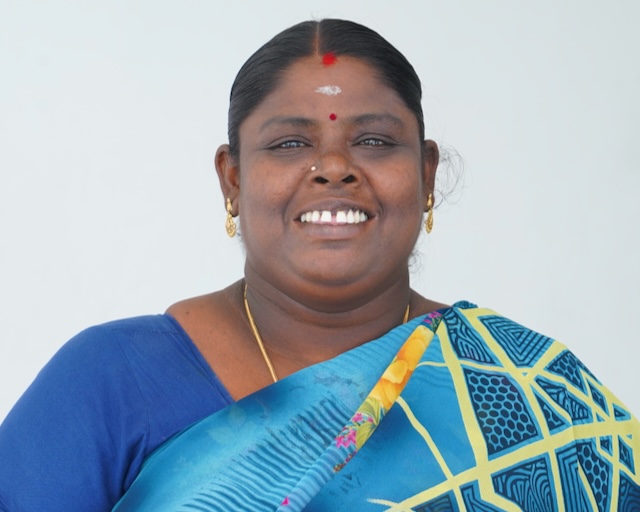
Lentil Village
Each hub is a workplace, not a contractor network. Artisans are trained in English literacy and basic maths, and read detailed written patterns for a single size.
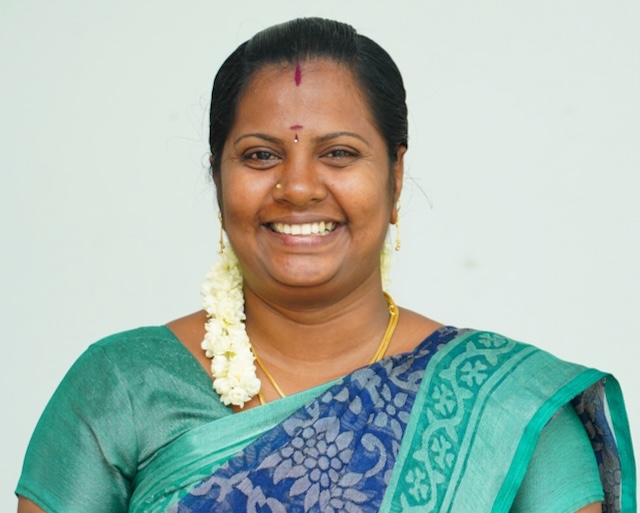
Bus Village
The fourth hub completes the network across rural Tamil Nadu. Every garment is made by a single artisan from first stitch to last, so traceability is built into how the work is organised, not added afterwards.
What does not change, whatever the order size.
One artisan, one garment.
Each piece is knitted from first stitch to last by a single artisan. No one hands off half-finished work to someone else. The person who starts it finishes it.
Written patterns, not sketches.
Patterns are written out in full, with no abbreviations, one per size. In conventional hand-knit production, individual knitters are generally not given written patterns. This is the basis of consistency across hundreds of hand-knitted pieces.
No machines, at any stage.
Knitting, joining and finishing are all done by hand. Bamboo and timber needles only. Zero electricity in production.
No minimum order.
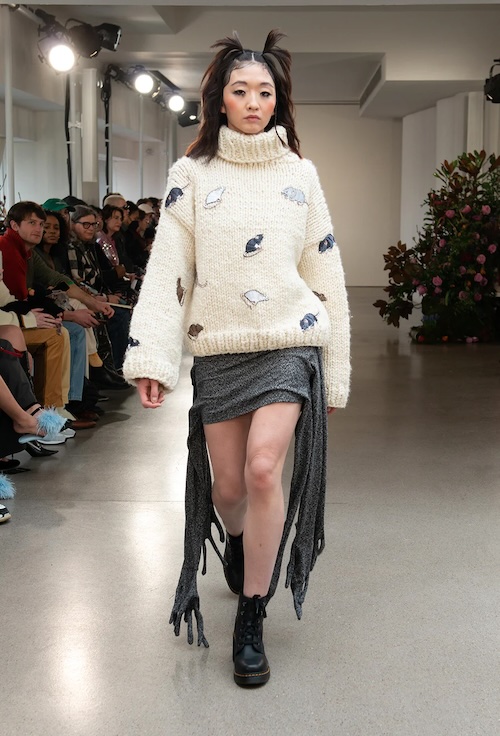
Production scales from a single piece to 1000 or more. A runway sample and a commercial run are the same process, just more trained knitters and more written patterns.
Hundreds of women artisans, trained and skilled.
The workforce is made up of women, most of whom had never been to school before they arrived. They are taught English literacy and basic maths so they can read written patterns, and they work from village hubs where the standard is held collectively.
The company is led by founder Danielle Chiel. The pattern writers, hub coordinators and artisans together are what make the method work: a written pattern is only as good as the knitter who can read it, and a knitter is only as consistent as the pattern she follows.
Key Team Behind Production & Training
Across our four hubs—Temple, Farmer, Lentil, and Bus Villages—local hub managers, trainers, pattern writers, and quality leads oversee daily tension calibration and artisan support.
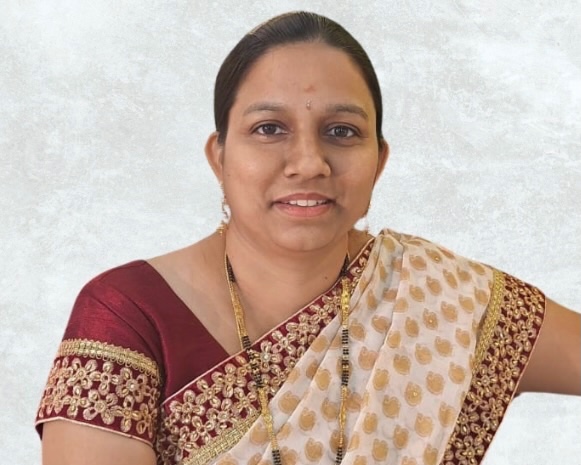
Poorani
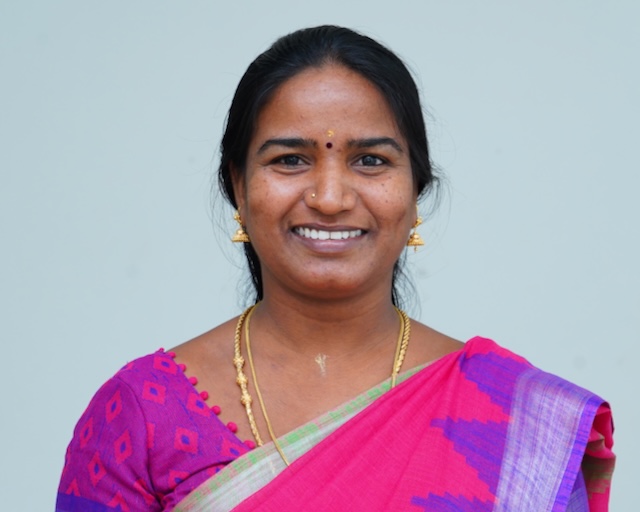
“I work hard to make sure our work is made well and delivered on time.”
Jaahvani
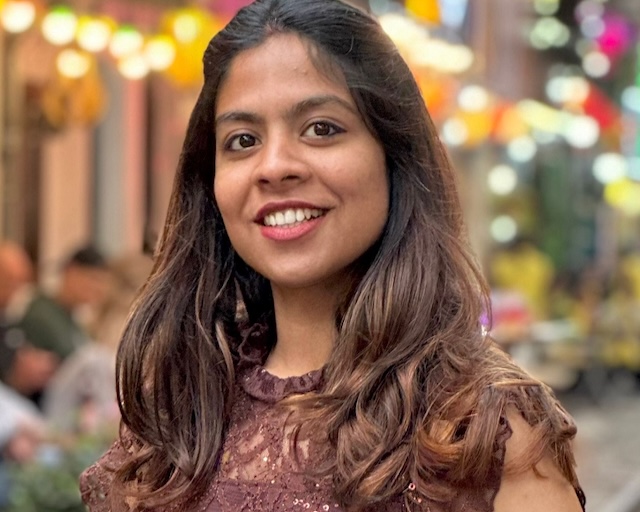
“My job is to check every piece of clothing we make, making sure everything is just right.”
Rajesh
“I make sure all our hand-knitted products get to where they need to go without any problems.”
Sarah
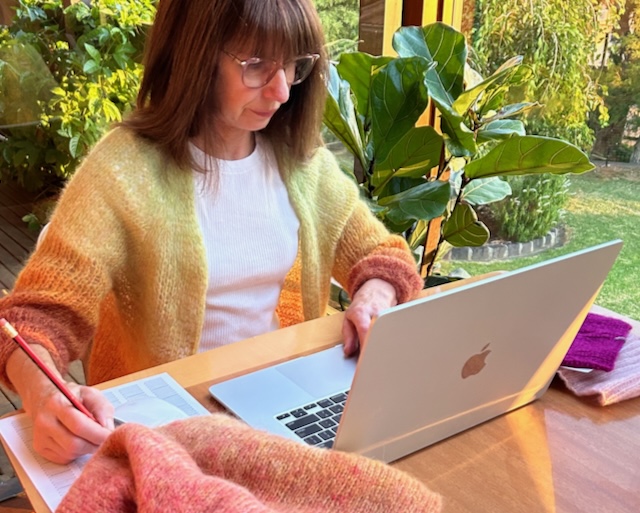
“Pattern writing is the blueprint of imagination, translating innovative designs stitch by stitch.”
Wendy
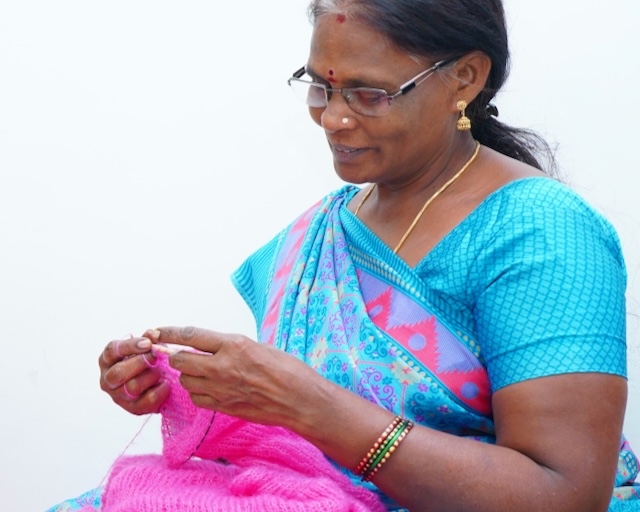
“Teaching the KOCO team new knitting skills is what we do. It is so rewarding seeing them develop.”
Want to see the method on your brief?
Send an image or sketch, your intended quantity and your target delivery date. We will come back with feasibility, indicative costing and lead times for a hand-knit production run.